
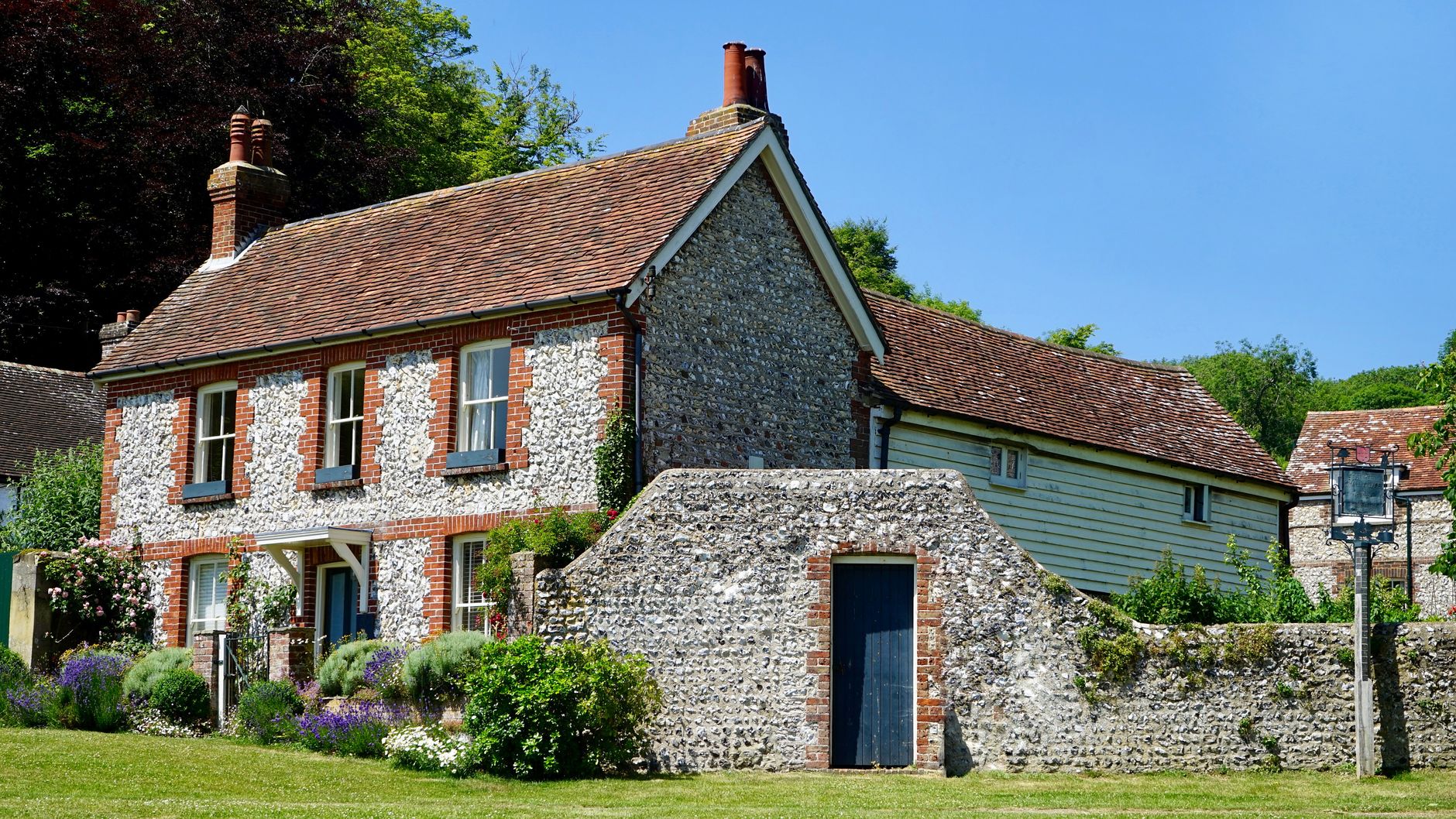
Keep the Brick Dry Without Changing How It Looks
Ask About Chimney Waterproofing
Tell us about the fireplace or chimney and what you have noticed. We reply to arrange a visit and a written price.
The Work Itself
Brick and stone absorb rain like a sponge, then release it slowly, staining the face and wearing the joints. A breathable repellent stops that without trapping vapor inside or giving the masonry a glossy look. We apply it only once the joints, crown and flashing are in good order, because sealing over a defect hides it. It suits tall exposed chimneys and coastal homes in salty air.
What a Repellent Is For
Brick and mortar take in rain. In a light shower, the face absorbs the water and gives it back to the air as soon as the sun comes out. In a long winter storm, especially on a tall chimney exposed on all sides, the masonry can take in so much that it stays wet for days, and that is when trouble starts: salts move to the surface and leave white crusts, mortar softens, the face of the brick begins to flake, and water works its way inside to the fireplace wall. A masonry water repellent is a clear liquid that soaks into the surface and lines the pores so liquid water is shed rather than drawn in, without forming a skin that would trap moisture already in the wall. It does not seal cracks, fill open joints or stop water at the roof seam. It reduces the soaking the brick takes, and on a sound chimney that is a real help.
What we will not do is apply a repellent to a chimney that needs repair. A cracked top, open joints or loose flashing let in far more water than a repellent can stop, and coating over them can give a false sense of security while the real leak carries on. So the visit begins with the condition of the chimney: the top, the brick faces, the joints, the cap and the roof seam. If any of those need work, the written price lists them first, with the repellent as the final line once the masonry is ready. We also avoid paints and glossy sealers sold as waterproofing, because a film that keeps vapor from escaping traps water in the brick and makes the face pop off over time. The products we use are made for masonry and leave the brick breathing.
The Look of the Brick After Treatment
Owners who care about the look of their house usually ask whether the treatment will change the brick. A good masonry repellent is close to invisible once dry: no shine, no darkening on most brick and only a slight deepening of tone on some stone. We test on a small patch first where the finish matters, such as a chimney built of reclaimed brick or faced in a natural stone veneer. A treated chimney also stays cleaner, since dirt carried in by rain does not soak in as deeply, and the white salt bloom that can mar a red brick face is less likely to appear. On a painted or limewashed chimney the approach is different: the paint or limewash itself has to be one that lets the wall dry, and a repellent may not be needed or may not bond, so we look at what is there before suggesting anything.
In Orange County the weather is gentler than in many places, but the winter storms that do arrive tend to be heavy, and summer sun is relentless on the south and west faces of a chimney. A repellent applied in dry weather to a clean, repaired chimney typically lasts a number of years before it needs renewing, depending on the product and the exposure. It earns its keep as part of a set: a sound top with a lip, a cap on the flue, tight joints and good metal at the roof, then the repellent on the faces. Owners in Anaheim, Fullerton and Santa Ana often book it straight after masonry or crown work, so the chimney is protected while the scaffold and roof access are still in place, and the written price shows the treatment as its own clear line.
Working With Creighton Chimney Pros
Measured Rooms
Opening, wall and ceiling sized before a finish is chosen
Covered Floors
Hearth, rugs and furniture protected while we work
Prices on Paper
Every part of the job listed with its cost
Photo Findings
Pictures of what we saw, sorted by urgency
Where we offer chimney waterproofing
Search for your town. Focus cities open a local page covering housing styles and postal codes.
Nothing found under that name. A neighboring town on the list may still cover you.
More Services
Chimney Sweep
Creosote and soot lifted from the flue so a refreshed hearth can burn without staining its new stone or tile.
Read about itChimney Inspection
A look at the flue, smoke chamber and roof top before any mantel, facing or insert goes on the drawing.
Read about itChimney Repair
Damage above the roof and inside the flue fixed first, so the new fireplace face below has a sound chimney behind it.
Read about itFireplace Inspection
Firebox, hearth, glass and surround measured and photographed, the starting sheet for any refacing or insert plan.
Read about itFireplace Repair
Cracked firebrick, tired doors and a smoky opening put right so the fireplace looks and works the way the room needs.
Read about itChimney Level 2 Inspection
Recorded video of the entire flue plus attic and roof checks, the right depth before a sale, a fuel switch or a quake claim.
Read about itChimney Cap Installation
A stainless or copper top that finishes the chimney visually and stops rain, nesting birds and stray embers.
Read about itChimney Flashing Repair
Metal at the roof joint reset or renewed so rain stays out of the wall behind your mantel and new surround.
Read about itChimney Masonry Repair
Brick and stone outside the house brought back to match, so the exterior of the chimney suits the new hearth within.
Read about itChimney Rebuilds
A chimney past saving rebuilt from the roof up or from the ground, with the new face planned to suit the home.
Read about itFireplace Cleaning
Ash, soot stains and cloudy glass cleared so the firebox, surround and hearth show off their materials again.
Read about itGas Fireplace Cleaning
Burner, pilot, ceramic logs and glass serviced so the flame looks right and the unit lights on the first try.
Read about itGas Fireplace Repair
Ignition, valve, remote and flame faults traced to one part, then fixed and test-fired with you watching.
Read about itFireplace Remodel
New surround, mantel, hearth or full refacing in stone, tile, plaster or wood, drawn to the room's proportions.
Read about itFireplace Inserts
Gas, wood or electric inserts chosen for heat and looks, fitted into the existing opening with a trim that suits the room.
Read about itPellet Stove Repair
Hopper-fed stoves that stop feeding, fail to light or trip their controls brought back into service.
Read about itWood Stove Repair
Seals, baffles, glass and firebrick renewed on freestanding stoves, with the stovepipe and wall distances rechecked.
Read about itGas Logs
Realistic ceramic log sets in birch, oak or driftwood styles, fitted to an existing firebox and plumbed safely.
Read about itChimney Seismic Retrofit
Masonry chimneys braced, strapped or rebuilt lighter above the roof so a quake is less likely to drop brick.
Read about itChimney Crown Repair
The cap of mortar or concrete atop the masonry sealed, patched or cast new so rain runs off rather than in.
Read about itDryer Vent Cleaning
Packed lint cleared from the duct between dryer and outside hood so clothes dry faster and the run stays cooler.
Read about itChimney Liner Installation
Stainless liners sized to the insert or stove, protecting old masonry and making a remodel with a new unit safe.
Read about itChimney Leak Repair
Water near the fireplace traced to crown, cap, flashing or masonry, then the source sealed before new finishes go up.
Read about itChimney Damper Repair
Seized, warped or gapped dampers repaired or swapped for a sealing top-mount model that opens with a cable.
Read about itChimney Chase Cover
The metal top of a framed chimney replaced with stainless or galvanized sheet, sloped and hemmed to shed water.
Read about it