Three owners, three very different numbers
Ask three homeowners in Anaheim what a hearth makeover should cost and you will hear figures with nothing in common, because each pictured a different job. One meant a coat of limewash over the old brick and a new oak shelf. Another meant stripping a 1970s slump-stone face and setting large porcelain panels floor to ceiling. The third meant closing up a drafty wood opening and fitting a gas insert with slim steel trim. All three count as a remodel. Their bills sit far apart.
Below we set out the parts of the work that move the total, the single piece that carries a posted price on our site, and what Creighton Chimney Pros hands back after we measure the wall.
Scope comes before finish
Before anyone talks about stone or tile, the fireplace has to pass a look at what sits behind its face. A new surround fixed over a cracked flue tile, or over a firebox with loose firebrick, is money spent on the wrong layer. So every remodel quote we write starts from the condition of the firebox, the damper and the flue. If those are sound, the quote is about looks. If they are not, the repair comes first and shows as its own line, so you can tell safety from style at a glance.
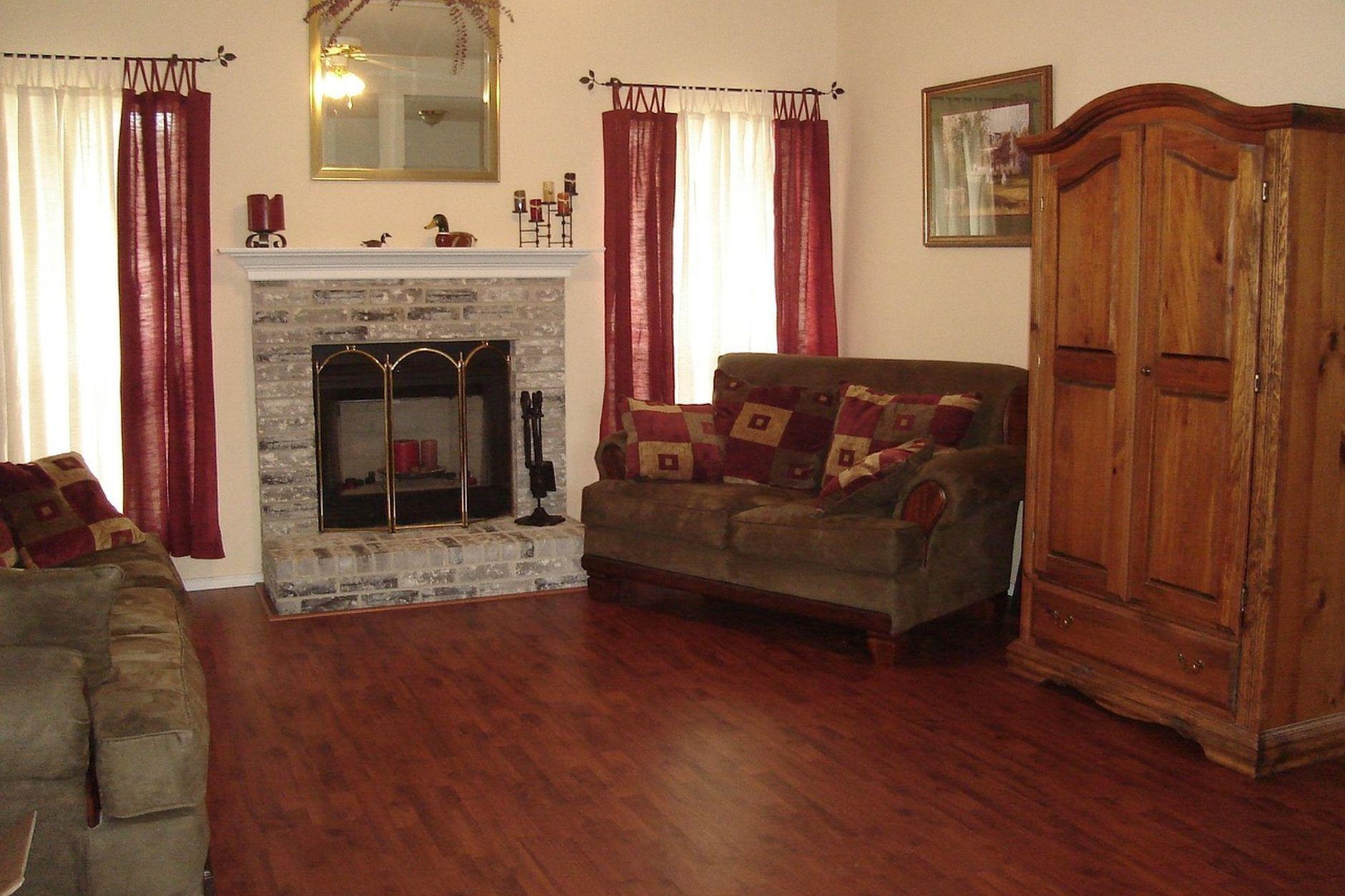
That first look also tells us what kind of fireplace you own. Most older Anaheim houses have a masonry fireplace: a brick firebox, a brick chimney, a damper in the throat. Many homes and condos built from the late seventies onward have a factory-built metal box inside a framed chase. Those two take different remodels. Masonry can carry heavy stone. A factory-built box comes with listed clearances that limit what can sit near the opening and how high a mantel has to be.
Five choices that set the total
- The face material. Paint or limewash over existing brick is the lightest touch. Thin stone veneer, tile and smooth plaster sit in the middle. Full-thickness stone, cast stone surrounds and slab hearths cost the most, in material and in labor, because they are heavy and need support.
- How much comes off. Covering sound brick costs less than removing a worn face. Taking down old slump stone or a cracked tile surround adds demolition, haul-away and wall patching before the new work starts.
- The hearth. Keeping a raised hearth is one thing. Cutting it flush with the floor, extending it to the depth an open fire needs, or replacing it with one slab each changes the job.
- The mantel. A floating shelf on a hidden bracket, a painted wood mantel with legs and a stone mantel all price differently, and the height has to respect the distance from the opening.
- What happens inside the opening. Keeping a wood fire, adding glass doors, fitting gas logs or converting to an insert. This choice often moves the total more than the face does.
The piece with a posted price
When the remodel includes a gas insert slotted into your current masonry opening, that piece is $2,900 to $5,800 installed. The range covers the size and finish of the unit, the trim around it, the liner up the chimney and the gas hookup. Where the plan adds a brand new gas fireplace to a wall that never had one, the figure moves to $4,650 to $9,350, since the framing, the vent route and the finish around it are all new.
Everything else in a remodel, the stone, the tile, the plaster, the mantel and the hearth, is priced from measurements. Proportions change too much from room to room for one figure to be honest.
Ask for a measured remodel quote
On the form, give us the width of the fireplace wall, what the face is made of today and the look you are after, even if that is a magazine page you can sum up in a sentence. We call back to book a measuring visit.
How the written quote is laid out
Each layer sits on its own line: any repair inside the firebox or flue, removal of the old face, the new surround material with its square footage, the hearth, the mantel, and the insert or doors if you chose them. Materials are named by type and finish, not just "stone". Where a line depends on what turns up under the old face, the quote says so plainly and explains how that line would be priced if it changes.
That layout lets you trade one choice for another. Swapping full stone for thin veneer, or a slab hearth for tile, alters one line and leaves the rest alone.
Good proportion costs nothing
The cheapest improvement in many remodels is proportion. A small opening on a wide brick wall can look heavier than it is. Carrying the new face only to the edges of the chimney breast, rather than across the whole wall, saves material and often looks better. A thinner mantel set a little higher can make a low ceiling feel taller. We talk these choices through at the measuring visit, because a sketch of your own room is worth more than any sample board.
The costly mistake is a remodel that ignores clearances. A wood mantel too near an open fire, a hearth that stops short, or trim that burns on a factory-built unit can all be flagged when the house is later sold. Our quote sets the dimensions to meet those limits from the start.
The Anaheim homes we see most
Single-story ranch houses across west and central Anaheim often have a long brick wall with a raised hearth running much of its length. Those take refacing well, and many owners keep the raised hearth as a bench seat. Homes up in Anaheim Hills more often have factory-built fireplaces, where an insert or a full box replacement is part of most remodels. We work the same way in Corona, Santa Ana and La Habra.
For the conversion side, read Gas Insert or New Direct Vent?. The full service is described on our fireplace remodel page, and repairs that often come first are on the fireplace repair page.
Seeing your own wall priced
Whenever you want real numbers for your room, the contact page is where to start; tell us a little about the wall and we will come out with a tape measure.
Picturing a Different Fireplace?
Creighton Chimney Pros plans surrounds, mantels, inserts and repairs from Anaheim. We check the chimney, measure the wall and send a sketch with a written price before any material is ordered.