Two roads to a gas flame
Owners who come to Creighton Chimney Pros wanting gas heat usually start in one of two places. Either they have a brick or metal fireplace they rarely light and want to make it useful, or the fireplace sits on the wrong wall and they would rather see a flame somewhere else entirely. The first leads to an insert. The second leads to a new direct vent fireplace. Both burn gas behind sealed glass. They differ in cost, in looks and in how much of the room changes.
The insert: working with what is there
An insert is a steel firebox with a glass front that slides into the existing opening. A trim panel closes the gap between the insert and the old face. Venting runs as a pair of flexible pipes, or one pipe inside another, up the old chimney to a cap at the top. Fresh air for the burner comes down, exhaust goes up, and the air in your living room never feeds the flame.
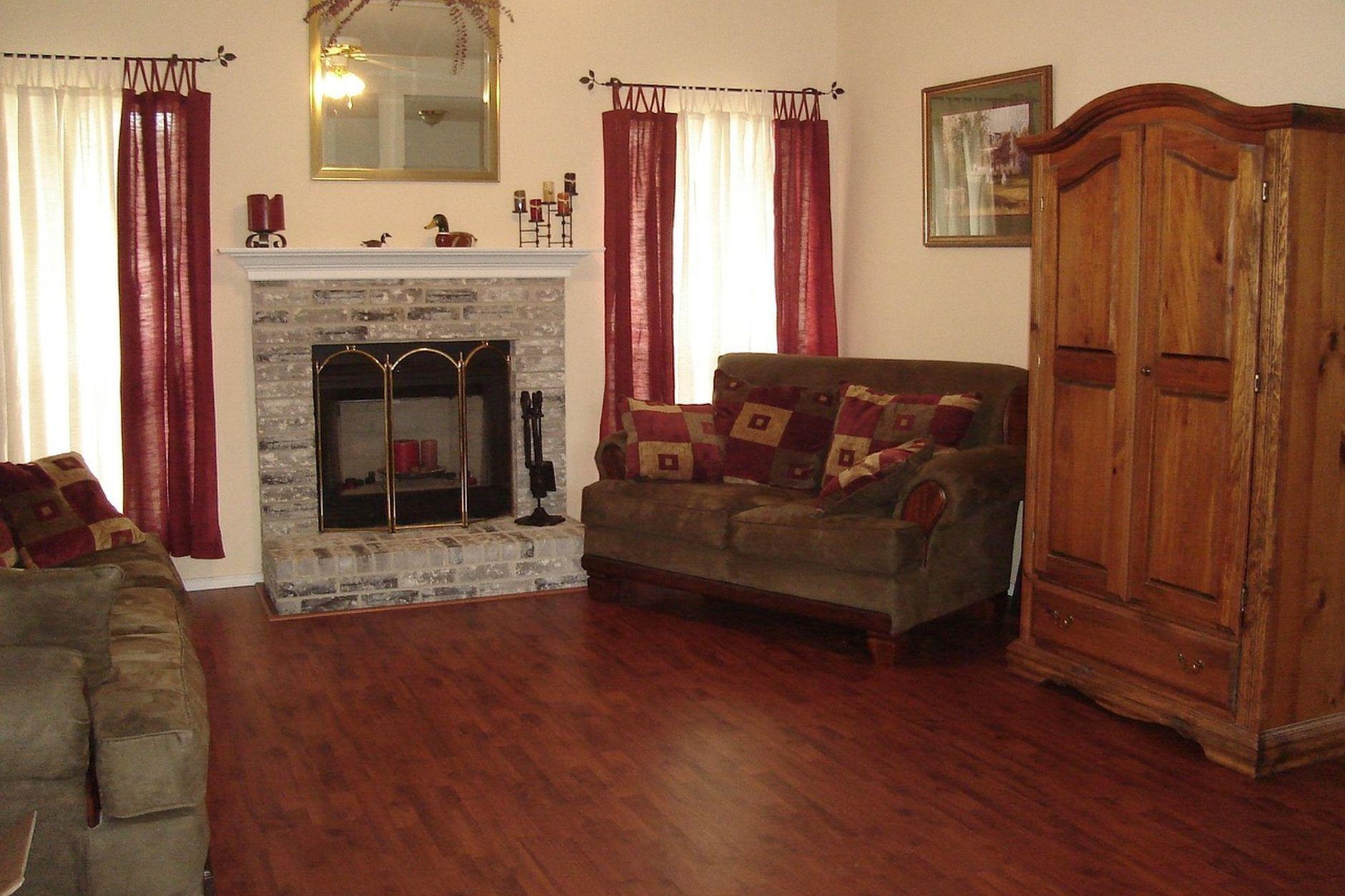
Looks. The insert reads as a framed window of fire set into your current surround. If you like the brick or stone you have, an insert keeps it. If you do not, an insert pairs well with a refaced front, since the trim panel and the new face can be designed together.
Price. Fitted into your current masonry or factory-built opening, $2,900 to $5,800. The low end is a modest unit with plain trim in a firebox that needs no prep. The high end is a larger unit with a wide decorative frame, a longer liner and a gas line that has to be brought to the hearth.
What can stop it. A firebox too small for any listed insert, a factory-built box whose maker does not allow one, or a chimney that cannot take a liner. We check those before quoting.
The direct vent fireplace: starting fresh
A direct vent fireplace is a complete sealed unit framed into a wall, venting straight out through that wall or up through the roof. With no masonry stack required, it fits a family room, a primary suite or a wall facing the patio where the house never had a hearth.
Looks. This is where the design freedom lives. Linear burners with a long, low flame, a flush opening with no visible trim, a tile or plaster face that runs to the ceiling. The whole wall is new, so its proportions are set to the room rather than to a 1960s firebox.
Price. Built new into a wall, $4,650 to $9,350. The range follows the size and style of the unit, the length and path of the vent, how far the gas line must travel, and the framing and finish around it.
What can stop it. A wall with no clear way outside, a vent end that would land too close to a window, door or property line, or a gas supply that cannot feed one more appliance. These come up at the site visit.
Side by side
| Point | Insert in the old opening | New direct vent unit |
|---|---|---|
| Installed price | $2,900 to $5,800 | $4,650 to $9,350 |
| Needs a chimney | Yes, for the liner | No |
| Where the flame sits | Where the fireplace already is | Any wall with a vent path |
| What changes in the room | The opening and its trim | A whole new feature wall |
| Old fireplace afterward | Becomes the insert | Closed off or left as it is |
In the form, say which wall you have in mind and whether the house already has a fireplace there. We call back to book a site visit and measure.
Which suits which house
Pick an insert when the fireplace is in the right place and the room is arranged around it. It costs less, keeps the focal point where the sofa already faces, and puts the old chimney back to work.
Pick a direct vent unit when the old fireplace faces the wrong way, sits in a room you seldom use, or would need so much work to accept an insert that the saving disappears. Some Anaheim owners do both over time: an insert in the living room first, a direct vent unit in the family room years later.
Burning rules and safety
Anaheim lies inside the South Coast air district, where wood fires can be restricted on certain winter days. Sealed gas units fall outside those limits, which is one reason owners who still burn logs decide to convert. A gas appliance has its own needs: working carbon monoxide alarms in the house and a yearly look at the burner, pilot and glass. Our gas fireplace repair page covers that service.
What we check on the visit
For an insert: the firebox dimensions, the damper, the size and state of the flue, and where gas enters the house. For a direct vent unit: the wall, what sits behind it, the vent path, the distance to openings, and the same gas question. We also ask how you use the room, since heat output should match the space rather than overwhelm it.
Further reading
The full insert service is on our fireplace inserts page. If the chimney needs a liner for the insert, The Liner Behind a Gas Insert explains that part. For the face around the opening, see Fireplace Remodel Cost in Anaheim.
Pricing your choice
Once you have a leaning either way, drop us a note through the contact page; the site visit settles the rest.
Picturing a Different Fireplace?
Creighton Chimney Pros plans surrounds, mantels, inserts and repairs from Anaheim. We check the chimney, measure the wall and send a sketch with a written price before any material is ordered.